In HVACR manufacturing, choosing the right copper tube form directly impacts production efficiency, automation compatibility, transportation cost, welding consistency, and material waste control. Among the most commonly used formats, level wound copper tube (LWC), pancake coils, and straight tubes each serve different production philosophies.
While they all originate from the same copper material base, their geometry determines how they behave in factory automation lines and field installation scenarios. For OEMs and HVACR manufacturers, selecting the right form is not just a procurement decision—it is a production efficiency strategy.
Understanding the Three Copper Tube Forms
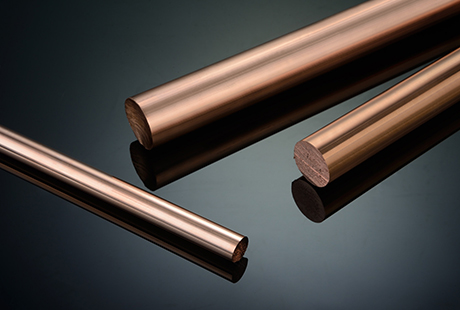
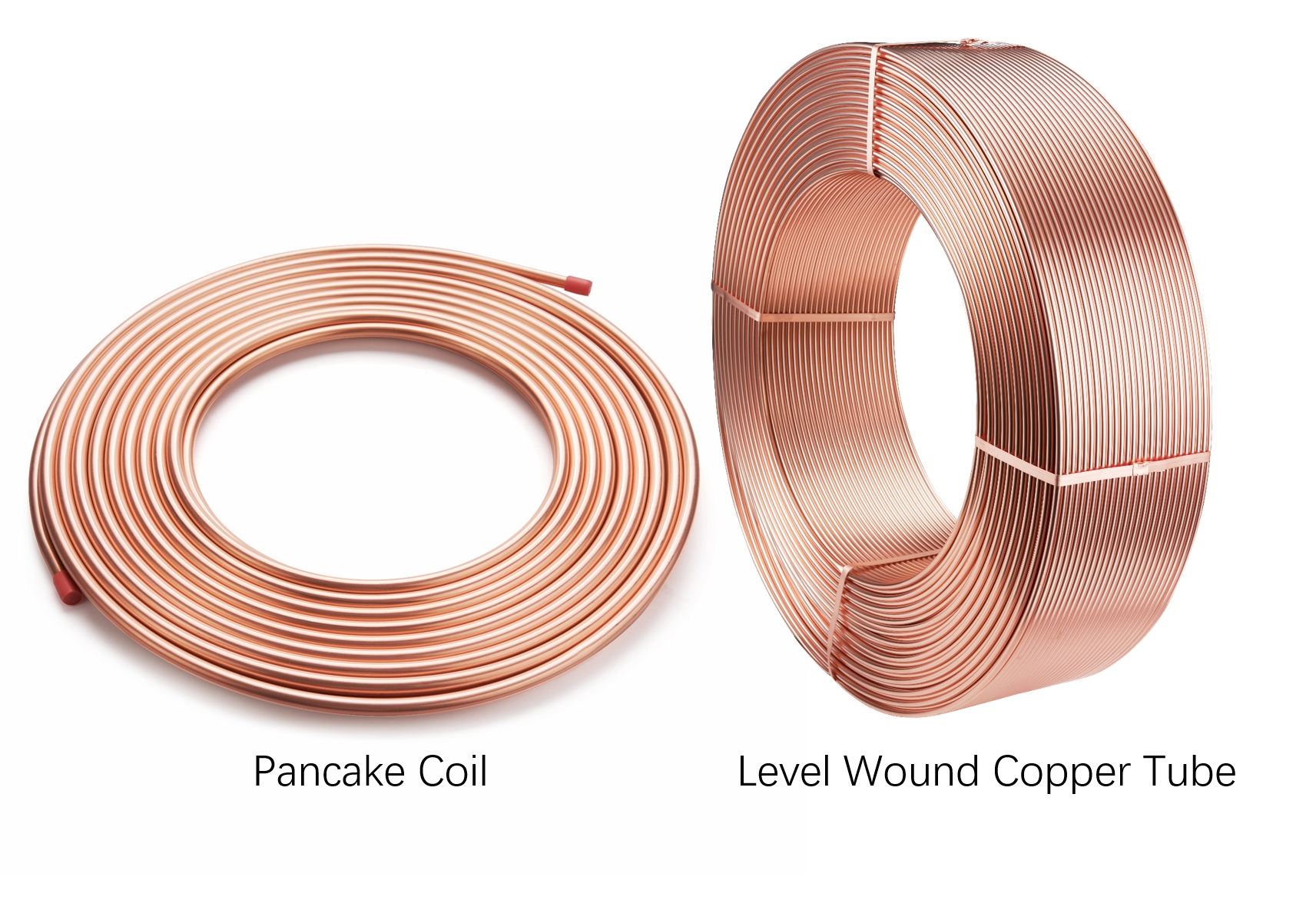
Before comparing performance, it is important to understand their structural differences. Level wound copper tube (LWC) is continuously wound in large, uniform coils designed for automated feeding systems. Pancake coils are smaller, tightly wound flat spirals commonly used in field installation and retail distribution. Straight tubes are cut-to-length rigid sections used in fabrication environments or pre-assembled piping systems. Although they serve similar end functions, their production behavior and logistics efficiency differ significantly.
Automation Efficiency in HVACR Production Lines
In modern HVACR factories, automation compatibility is one of the most important selection criteria. Level wound copper tube is specifically designed for continuous uncoiling in automated production lines. This is achieved through precise annealing and stress-relief winding, which minimizes spring-back during straightening and ensures accurate cut-to-length feeding into downstream bending and flaring stations. It supports high-speed tube feeding, reduces downtime, and integrates well with bending, cutting, and brazing systems. This makes it highly suitable for large-scale OEM manufacturing. Pancake coils, while flexible, are more commonly used in semi-manual processes. They require additional handling steps such as flattening and alignment before feeding into automated systems, which slightly reduces production efficiency. Straight tubes, on the other hand, are best suited for manual assembly or pre-cut systems. They eliminate the need for uncoiling but lack flexibility in continuous production environments.
Transportation and Storage Efficiency
From a logistics perspective, material form significantly affects packaging density and shipping cost. Level wound copper tube offers the highest space efficiency because of its compact, uniform winding structure. It allows bulk packaging and reduces storage footprint in factory warehouses. Pancake coils take up more irregular space due to their flat spiral shape, while straight tubes require long storage racks and are more prone to handling damage during transport. For global HVACR supply chains, this difference often translates directly into cost efficiency at scale.
Welding and Processing Stability
In HVACR production, welding consistency is closely related to tube surface condition and feed stability.Level wound copper tube provides stable tension during uncoiling, which helps maintain consistent feeding into brazing or welding stations. This reduces variation in joint quality and supports automated brazing processes. Pancake coils may introduce slight tension fluctuations during manual handling, which can affect consistency in high-speed production lines. Straight tubes provide excellent stability in static welding environments but are less adaptable to continuous processing systems.
Material Utilization and Factory Waste Control
Material efficiency is another key factor in HVACR manufacturing economics. Level wound copper tube minimizes waste in automated cutting systems because it can be continuously fed and optimized for nesting algorithms. This reduces scrap rate and improves yield in large-scale production. Pancake coils also perform reasonably well in small-batch production, but manual handling may introduce cutting inefficiencies. Straight tubes, while precise, often require predefined lengths, which can lead to higher leftover material depending on design variation. In high-volume manufacturing, even a small percentage of waste reduction can significantly impact overall production cost.
Comparative Overview of Copper Tube Forms
To better understand their differences, here is a simplified engineering comparison:
· Level wound copper tube: Best for automated production, high efficiency, and bulk manufacturing environments
· Pancake coil: Best for field installation flexibility and mid-scale distribution
· Straight tube: Best for rigid assembly, prefabricated systems, and fixed-length applications
Each form has a clear engineering purpose, and the optimal choice depends on production scale and installation strategy rather than material quality alone.
Industrial Selection Considerations
In real HVACR projects, manufacturers often combine different tube formats depending on process stages. For example, level wound copper tube may be used in upstream automated production, while straight tubes or coils are used in downstream assembly or installation. When evaluating suppliers, consistency in winding precision, surface quality, and dimensional tolerance becomes critical. At Jintian Copper, level wound coil solutions are engineered to support continuous production stability and reduce operational interruptions in HVACR manufacturing lines.
FAQ: Copper Tube Form Selection in HVACR
What is level wound copper tube mainly used for?
It is primarily used in automated HVACR production lines requiring continuous feeding and high efficiency.
How is pancake coil different from level wound tube?
Pancake coils are smaller and more suitable for manual installation, while level wound tubes are optimized for industrial automation.
Are straight tubes better for welding?
Straight tubes provide stable positioning but are less efficient for continuous automated welding systems.
Which form reduces material waste the most?
Level wound copper tube generally offers the best material utilization in mass production environments.

 English
 한국어
한국어 français
 Deutsch
 Español
 italiano
 العربية
 tiếng việt
 Türkçe
 ไทย
ไทย 中文
中文