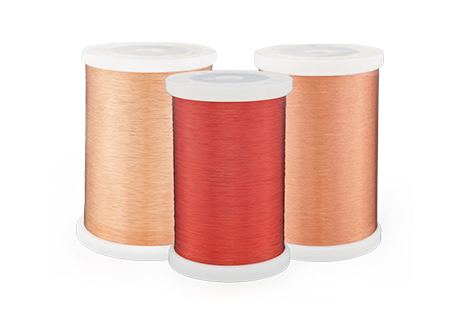
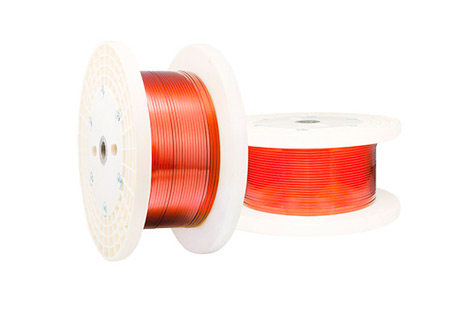
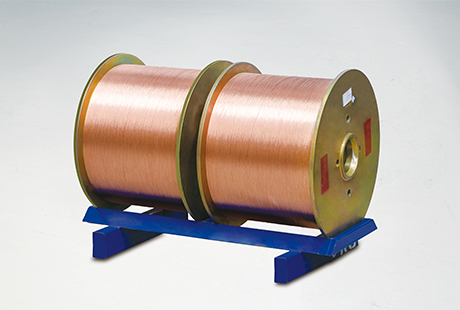
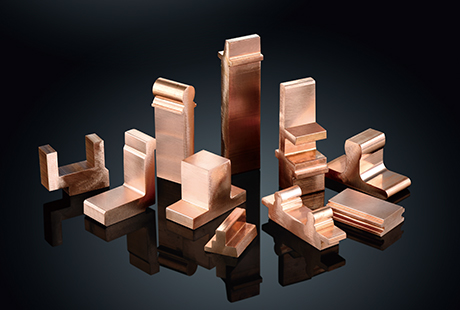
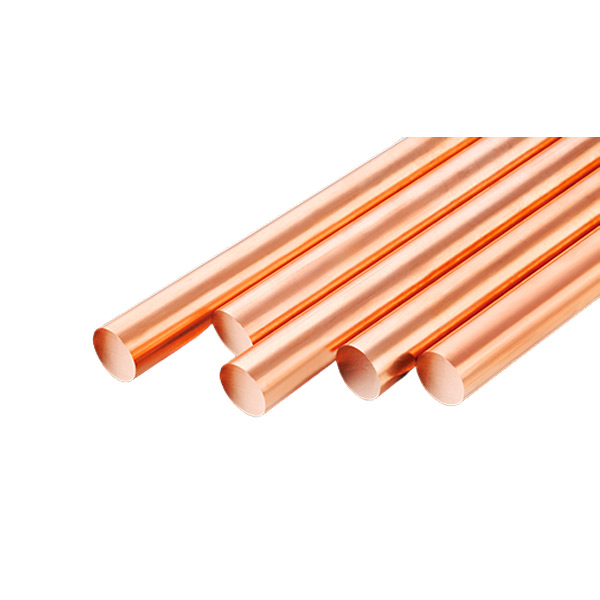
For electrical contacts and power components, copper selection is closely tied to conductivity, heat generation, contact reliability, and manufacturing requirements. Two frequently discussed grades are Cu-HCP and ETP copper. Although both serve demanding electrical applications, their material characteristics and processing considerations differ—particularly in conductivity, deoxidation practice, and welding/brazing behavior.
Understanding Cu-HCP (EN CW021A / UNS C10300), how it differs from ETP copper (EN CW004A / UNS C11000), and where each grade fits helps engineers specify the right material for terminals, connectors, busbars, and other conductive components.
What Is Cu-HCP Copper?
Cu-HCP is a copper grade defined in European standards (EN CW021A; UNS C10300) and classified as low-phosphorus, phosphorus-deoxidized copper. Its defining feature is very low residual phosphorus—typically ≤ 0.004% (max. 40 ppm) for EN CW021A, with commercial values usually in the 20–40 ppm range. UNS C10300 may specify similar or slightly different limits (e.g., 10–50 ppm); the applicable standard should always be confirmed. The designation should not be treated as a synonym for "pure copper" or as an oxygen-free high-conductivity grade, although its deoxidized condition gives it an oxygen level approaching that of oxygen-free coppers.
The key characteristic of Cu-HCP is very low residual oxygen, achieved through phosphorus deoxidation. This provides good resistance to hydrogen embrittlement and favorable welding/brazing behavior. However, even small amounts of phosphorus slightly reduce electrical conductivity compared with ETP or oxygen-free copper. Nevertheless, Cu-HCP maintains high conductivity, typically ≥ 98% IACS (approx. 57 MS/m), with exact value depending on phosphorus content, temper, and the relevant standard.
Depending on the applicable specification, Cu-HCP can be supplied in various forms and tempers, including wire, strip, sheet, bar, rod, and custom shapes. Each form may require specific mechanical conditions for subsequent forming, stamping, or assembly.
Copper grade, temper, dimensions, and manufacturing process should always be specified together. A grade that performs well in one process may not be optimal for a stamped contact or formed component without the appropriate material condition.
Cu-HCP vs. ETP Copper: Key Material Differences
ETP copper is electrolytic tough-pitch copper, designated as UNS C11000 in American standards and Cu-ETP (CW004A) in European standards. It is one of the most widely used high-conductivity copper grades for electrical applications.
The basic differences are summarized below:
| Property | Cu-HCP (CW021A / C10300) | ETP Copper (CW004A / C11000) |
| :--- | :--- | :--- |
| Copper type | Phosphorus-deoxidized, low-phosphorus copper | Electrolytic tough-pitch copper |
| Conductivity | High, typically ≥ 98% IACS (approx. 57 MS/m); depends on P content, temper, standard | Very high, typically 100–101.5% IACS (approx. 58–59 MS/m) |
| Oxygen characteristic | Very low residual oxygen, typically ≤ 0.001% (≤ 10 ppm) | Controlled residual oxygen, typically 0.02–0.04% (200–400 ppm) |
| Deoxidation practice | Phosphorus-deoxidized | Tough-pitch (oxygen-bearing) |
| Welding/brazing behavior | Good resistance to hydrogen embrittlement; suitable for joining | Susceptible to hydrogen embrittlement at elevated temperatures in H₂-containing or reducing atmospheres |
| Primary applications | Where balance of high conductivity and reliable weldability/brazability is required | Where maximum conductivity is the overriding priority |
| Common forms | Wire, strip, sheet, bar, rod | Sheet, strip, rod, wire, bar |
Selection should not be based on grade designation alone. Different standards may employ different designations or requirements; the applicable specification should always be verified for the intended end-use.
Electrical Conductivity and Contact Performance
Conductivity directly affects electrical resistance and Joule heating. Unnecessary resistance contributes to energy loss and localized temperature rise.
ETP copper is often the first choice when maximum conductivity is the primary requirement. Cu-HCP is attractive when good conductivity must be combined with reliable welding, brazing, or resistance to hydrogen embrittlement during high-temperature joining.
However, conductivity is not the sole factor. A connector or terminal must also maintain adequate mechanical strength, dimensional stability, contact pressure, and surface quality throughout service life. For busbars, the relationship between conductivity and geometry is equally important—cross-sectional area, thickness, connection method, operating current, and heat dissipation all influence the final design.
Therefore, selection should involve the complete electrical, mechanical, and manufacturing specification, not just a single conductivity value.
Forming, Welding, and Manufacturing Considerations
Electrical copper components are rarely used in as-supplied mill condition. Depending on the product, copper may undergo stamping, bending, drawing, rolling, annealing, welding, or brazing before final configuration.
Temper has a major influence on these processes. A softer (annealed) condition provides greater ductility for severe forming, while a harder (half-hard or hard) temper offers improved strength and dimensional stability.
For stamped terminals and connectors, engineers should consider:
- Forming requirements: bending radius, stamping geometry, ductility.
- Joining requirements: welding, brazing, soldering, or mechanical fastening.
- Surface requirements: contact areas may require controlled roughness, cleanliness, or subsequent plating (e.g., silver, tin, or nickel).
- Thermal requirements: current-carrying components must manage heat during normal operation and withstand short-circuit conditions.
The same grade can perform differently depending on temper and processing history. Material selection should always be linked to the actual manufacturing route and available equipment.
When welding or brazing is required, Cu-HCP's phosphorus-deoxidized, low-oxygen condition offers distinct advantages over ETP copper. ETP copper can be susceptible to hydrogen embrittlement when heated above approximately 400°C in hydrogen-containing or reducing atmospheres, particularly during brazing or welding. Protective measures such as inert gas shielding or vacuum brazing should be used where necessary. Cu-HCP, with very low residual oxygen, is not susceptible to hydrogen embrittlement under the same conditions, substantially reducing risk during joining.
Applications of Cu-HCP and ETP Copper
Both grades can serve demanding electrical applications; final selection depends on design, performance, and manufacturing requirements.
Electrical contacts and terminals
Good conductivity reduces resistance and heating; appropriate temper supports forming and assembly. If welding or brazing is involved, Cu-HCP is often preferred.
Connectors
Copper strip and related forms are processed into stamped connector components where conductivity, dimensional accuracy, surface condition, and spring property matter. Both grades are used; Cu-HCP is selected when joining reliability is critical.
Busbars and power components
ETP copper is widely used where maximum conductivity is critical. Cu-HCP may be considered when the design requires welded/brazed joints, or when corrosion resistance and freedom from hydrogen embrittlement during service are important.
General conductive components
Strip, wire, rod, and specialized shapes support systems requiring efficient current transmission. Choice depends on the balance of conductivity, formability, joinability, and cost.
Which Copper Should You Specify?
The decision should start with the application's most demanding requirement—maximum conductivity, weldability, formability, or a combination—rather than from the grade designation itself.
Consider Cu-HCP (CW021A / C10300) when:
- Good conductivity is required (≥98% IACS), but maximum conductivity is not the sole priority.
- The component will be welded, brazed, or exposed to hydrogen-containing atmospheres during processing or service.
- Low residual oxygen is beneficial for joining or avoiding hydrogen embrittlement.
- The material will be fabricated into contacts or components requiring reliable, porosity-free joints.
Consider ETP copper (CW004A / C11000) when:
- Maximum conductivity (100–101.5% IACS) is the primary requirement.
- Standard electrical processing is used, with no welding/brazing in hydrogen-bearing atmospheres anticipated.
- The project specifically requires a C11000 or Cu-ETP specification.
- The application prioritizes established high-conductivity copper performance and cost-effectiveness.
Before placing an order, buyers should provide alloy designation, applicable standard (e.g., EN 13601, EN 1652, ASTM B152), temper, dimensions, quantity, and intended end-use application. These details allow the supplier to evaluate whether the selected grade and condition suit the complete production process and final service environment.
FAQ
Is Cu-HCP suitable for electrical connectors?
Yes. Cu-HCP (CW021A / C10300) is well suited for many connector and contact applications, provided the specified temper and surface condition meet design requirements. It is particularly appropriate when welding, brazing, or soldering is required during assembly.
Does Cu-HCP contain phosphorus?
Yes. Cu-HCP is phosphorus-deoxidized copper with a controlled but low residual phosphorus content—typically ≤ 0.004% (max. 40 ppm) for EN CW021A (commercial values usually 20–40 ppm). The exact content should be confirmed against the applicable standard.
Is ETP copper the same as C11000?
C11000 is the widely recognized UNS designation for electrolytic tough-pitch copper. In European standards, the equivalent is Cu-ETP (CW004A). Whether a particular ETP product meets C11000 should be verified against the relevant specification and mill certificate.
Which copper is better for busbars?
ETP copper is often preferred when maximum conductivity is required. Cu-HCP should be considered when the design involves welded/brazed joints, or when resistance to hydrogen embrittlement is important. Final choice depends on conductivity, mechanical strength, dimensions, processing method, applicable standard, and operating temperature conditions.
Can Cu-HCP be stamped into electrical components?
Yes. Cu-HCP products with suitable temper can be used for stamped components. The appropriate temper (e.g., annealed, quarter-hard, half-hard) should be selected based on forming requirements and final mechanical property needs.
Does copper temper affect contact performance?
Yes. Temper directly affects strength, ductility, hardness, spring behavior, and forming characteristics—all of which influence dimensional stability, contact pressure, wear resistance, and overall mechanical performance of contacts and connectors.
Standards referenced (for verification):
EN 13601: Copper and copper alloys – Copper rod, bar and wire
EN 1652: Copper and copper alloys – Plate, sheet, strip and circles
ASTM B152 / B152M: Standard Specification for Copper Sheet, Strip, Plate, and Rolled Bar (Note: UNS C10300 is included in the applicable grade list; verify specific revision for dimensional and tolerance requirements.)
ASTM B187 / B187M: Standard Specification for Copper Bar, Bus Bar, Rod, and Shapes

 English
 한국어
한국어 français
 Deutsch
 Español
 italiano
 العربية
 tiếng việt
 Türkçe
 ไทย
ไทย 中文
中文