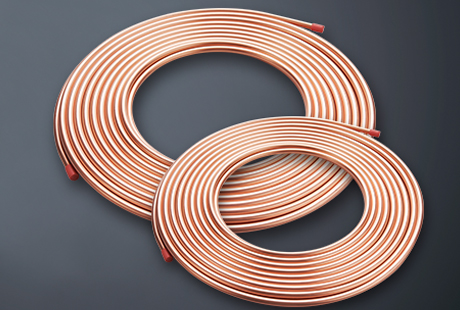
When Brass Strip is used for Terminals, Connectors, Automotive components, or Formed parts, the alloy designation is only the starting point. Forming severity, thickness, temper, surface quality, and dimensional tolerance can all influence the final result. This makes the comparison between CuZn37 and CuZn36 particularly relevant when a project involves bending, stamping, or deep drawing.
Both are Copper-zinc Brass grades with good forming potential, but their exact properties depend on the applicable standard and material condition. For buyers, the practical question is not simply which alloy is “better,” but which specification provides the right balance of ductility, strength, surface quality, and processing performance.
What is CuZn37 Brass?
CuZn37 is an alpha brass containing approximately 63% Copper and Zinc as the balance in commonly referenced specifications. For example, KME identifies CuZn37 as CW508L under EN terminology and C27200 under UNS, and describes it as a widely used brass for Cold forming, Deep-drawn parts, Stamped parts, and Connectors.
Its single-phase alpha structure contributes to good cold-forming behavior. This makes CuZn37 particularly relevant when brass strip must be shaped without excessive cracking or loss of surface quality.
Typical forms include sheet and strip, with strip being especially useful for continuous stamping and forming operations. JINTIAN's high-precision brass strip product is also positioned for shallow and deep drawing, including applications such as terminals, connectors, radiator shells, automotive fins, and decorative components.
CuZn37 vs CuZn36: Chemical Composition and Density
The distinction between CuZn37 and CuZn36 is relatively small in nominal copper-zinc balance, but material selection should still follow the exact standard rather than assuming the two grades are interchangeable.
Property | CuZn37 | CuZn36 |
Basic alloy | Copper-zinc brass | Copper-zinc brass |
Nominal Cu level | About 63% in common specifications | About 64% in common specifications |
Zinc | Balance | Balance |
Structure | Alpha brass | Alpha brass |
Cold forming | Very good | Very good |
Deep drawing | Well suited | Well suited |
Common forms | Strip, sheet, other wrought forms | Strip, sheet, other wrought forms |
For CuZn37 density, published technical data commonly falls around 8.4–8.5 g/cm³, but the exact value should be taken from the applicable specification and product condition. KME, for example, lists a typical density of 8.47 g/cm³ for CuZn37.
CuZn36 should be treated in the same way. JINTIAN's CuZn36 page identifies the grade as CW506L under EN terminology and C27450 under ASTM terminology, with its own specified chemical and physical properties.
The important point for procurement is simple: density and composition should be checked against the standard named on the purchase specification rather than copied from a generic alloy table.
Which Brass is Better for Deep Drawing?
Deep drawing places significantly greater demands on brass strip than simple cutting or bending. The material must withstand plastic deformation while maintaining dimensional accuracy and surface integrity.
For this reason, the most important factors include:
· Ductility and elongation: Higher ductility generally provides greater forming capacity.
· Temper: Softer material is often preferred for severe forming, while harder tempers provide greater strength.
· Thickness: Thinner strip can respond differently to the same tooling and drawing ratio.
· Work hardening: Repeated deformation can increase strength while reducing remaining ductility.
· Tooling and lubrication: Die radius, clearance, punch geometry, and lubrication can strongly influence cracking and surface defects.
CuZn37 is widely used for cold forming because it provides a practical combination of formability and material cost. KME specifically identifies it as a major brass alloy for cold forming and lists deep-drawn and stamped parts among its applications.
However, it would be misleading to say that CuZn37 can deep-draw while CuZn36 cannot. Both can provide good formability, and the better choice depends on the severity of forming, temper, strip thickness, tooling, and required final properties.
CuZn36 Chemical Composition and Formability
Understanding CuZn36 chemical composition is useful when comparing closely related brass grades. A typical CuZn36 specification contains roughly 64% copper with zinc as the balance, alongside controlled limits for elements such as iron, nickel, lead, aluminum, and tin. One technical data sheet identifies CuZn36 as an alpha-phase, lead-free brass with very good cold-forming behavior.
The slightly different copper-zinc balance can influence mechanical behavior, but the difference should not be exaggerated. In real production, temper and processing conditions can have a larger effect on forming performance than a small change in nominal copper content.
For a manufacturer choosing between CuZn37 and CuZn36, it is therefore more useful to compare the specified mechanical properties and forming requirements than to rely on the alloy name alone.
CuZn37 vs CuZn36 for Brass Strip Applications
The choice becomes clearer when the application is considered alongside the manufacturing process.
Application | Main Selection Consideration | Why It Matters |
Terminals | Conductivity, temper, stamping performance | Must maintain shape and reliable contact |
Connectors | Formability, surface quality, tolerance | Complex profiles may require repeated forming |
Automotive parts | Deep drawing, strength, surface condition | Components may combine forming with demanding dimensional requirements |
Decorative components | Surface finish and formability | Appearance is part of the finished-product specification |
Hardware | Strength, corrosion resistance, machinability | Requirements vary with geometry and service conditions |
JINTIAN's Brass Strip portfolio is designed for applications including Electronic components, Terminals, Connectors, Automotive parts, Hardware, and Decorative products. Its Brass Strip materials are also described as having good ductility and deep-drawing capability.
This makes Brass Strip selection a combination of alloy + temper + geometry + forming process, rather than an alloy-name decision alone.
How to Select CuZn37 or CuZn36 Brass Strip
Before ordering brass strip, purchasing teams should provide enough information for the supplier to evaluate both the material and the manufacturing process.
The specification should normally include:
1. Alloy and applicable standard — Identify CuZn37 or CuZn36 according to the required specification.
2. Thickness and width — Dimensional requirements directly affect forming behavior and tooling.
3. Temper — Define the required balance between strength and ductility.
4. Forming requirements — State whether the strip will undergo bending, stamping, shallow drawing, or deep drawing.
5. Surface and tolerance requirements — Important for connectors, terminals, and visible components.
6. End application — The supplier can better evaluate the material when the final use is known.
For demanding deep-drawing applications, it is particularly important to match the strip temper with the drawing depth and tooling design. JINTIAN's high-precision brass strip range includes CuZn37 and is positioned for shallow and deep drawing applications, providing a relevant option for manufacturers evaluating brass strip for formed components.
If you need to determine whether CuZn37 or CuZn36 is more appropriate for a specific strip application, JINTIAN can help evaluate the alloy, temper, dimensions, and forming requirements together.
FAQ
Is CuZn37 suitable for automotive terminals?
Yes. CuZn37 brass strip can be used for formed electrical and automotive components where good cold-forming performance is required. JINTIAN also lists terminals and automotive-related parts among its brass strip applications.
Does CuZn37 work well after annealing?
Yes. Annealing can restore ductility after cold deformation and may be important when a component requires multiple forming stages. The appropriate annealing conditions depend on the material and process.
What affects the deep-drawing performance of brass strip?
Temper, thickness, alloy condition, elongation, tooling geometry, drawing ratio, lubrication, and surface quality can all affect the result.
Is CuZn36 suitable for electrical components?
Yes. CuZn36 can be used for various electrical and formed components, provided its conductivity, mechanical properties, temper, and surface requirements meet the application requirements.
How does brass thickness affect forming performance?
Thickness influences deformation behavior, required forming force, dimensional stability, and the risk of cracking. Tooling should be designed around the actual strip thickness.
What should buyers specify when ordering CuZn37 strip?
Specify the alloy, applicable standard, temper, thickness, width, tolerances, surface condition, forming process, and final application.

 English
 한국어
한국어 français
 Deutsch
 Español
 italiano
 العربية
 tiếng việt
 Türkçe
 ไทย
ไทย 中文
中文