In refrigeration and precision fluid control systems, the copper capillary tube plays a critical role in regulating refrigerant flow, stabilizing system pressure, and ensuring efficient heat exchange performance. Even slight variations in tube dimensions or internal cleanliness can significantly impact cooling efficiency and system stability. Minor inconsistencies in tube structural specifications or internal cleanliness will interfere with stable refrigerant circulation and weaken overall refrigeration operating efficiency.
This article explains how to correctly select copper capillary tubes based on key engineering parameters such as inner diameter, length, wall thickness, surface cleanliness, and refrigerant compatibility.
Understanding Copper Capillary Tubes in Refrigeration Systems
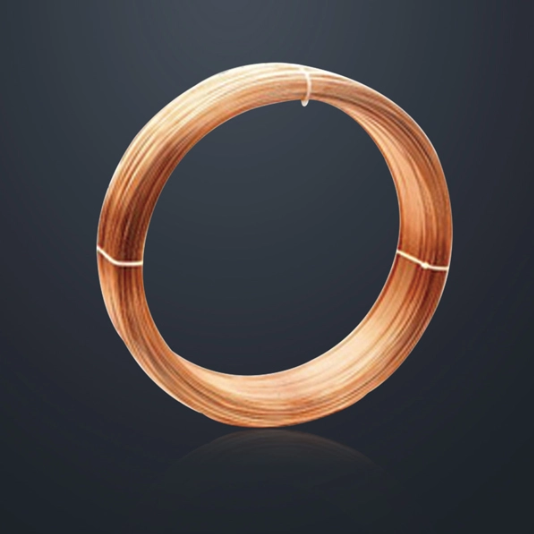
A copper capillary tube is a small-diameter precision tube used primarily as a throttling device in refrigeration and air conditioning systems. It controls refrigerant flow between the high-pressure and low-pressure sides of the system. Unlike mechanical expansion valves, capillary tubes rely entirely on geometry—especially inner diameter and length—to regulate flow resistance. They are typically applied in household refrigerators, small air-conditioning systems, heat pump components, and laboratory and precision cooling systems.
Inner Diameter: The Most Critical Flow Control Parameter
The inner diameter of a copper capillary tube directly determines refrigerant flow rate and system pressure balance. Even a 0.01 mm variation can significantly affect system performance in precision cooling applications. Smaller inner diameters increase flow resistance and reduce refrigerant flow, while larger inner diameters improve flow capacity but may reduce throttling efficiency. Therefore, matching the diameter precisely with compressor capacity is essential for overall system stability. In engineering design, inner diameter is always the first parameter defined when selecting a copper capillary tube.
Tube Length and Its Impact on System Performance
Length is another major factor that determines pressure drop inside the capillary tube. Longer tubes increase resistance, while shorter tubes allow faster refrigerant flow. In practical applications, longer capillary tubes are used for systems requiring stronger throttling effect, whereas shorter tubes are suitable for low-capacity or compact refrigeration systems. Fine-tuning of length is often required during system calibration. In large-scale production, manufacturers often test multiple length configurations to achieve optimal cooling efficiency.
Wall Thickness and Mechanical Stability
Although copper capillary tubes are thin-walled by design, wall thickness still plays an important role in durability and pressure resistance. Key engineering requirements include:
Sufficient strength to withstand system operating pressure
Flexibility for bending during installation
Consistency in wall thickness for stable flow characteristics
Excessively thin walls may risk deformation, while overly thick walls can reduce thermal responsiveness and flexibility.
Cleanliness and Internal Surface Quality
In refrigeration systems, internal cleanliness is just as important as dimensional accuracy. Any contamination inside the copper capillary tube can block flow or cause damage to the compressor. High-quality tubes feature no oil residue or oxidation inside, a smooth internal surface to reduce friction loss, strict control of particulate contamination during production, and proper sealing and packaging before shipment. At Jintian Copper, strict cleaning and quality control processes are applied to ensure stable performance in refrigeration-grade applications.
Refrigerant Type Compatibility
Different refrigerants behave differently under pressure and temperature conditions, which directly affects capillary tube selection. Common refrigerants include:
R134a (widely used in domestic refrigeration)
R410A (high-pressure air conditioning systems)
R32 (high-efficiency modern HVAC systems)
Natural refrigerants such as CO₂ in advanced systems
Each refrigerant requires a different combination of tube diameter and length to achieve optimal throttling performance. Incorrect matching may result in unstable cooling or system inefficiency.
Copper Capillary Tube Selection Reference Table
| System Type | Inner Diameter | Length Range | Typical Refrigerant | Application Notes |
|---|
| Household refrigerator | Small | Long | R134a | High throttling stability required |
| Small air conditioner | Medium | Medium | R32 / R410A | Balanced flow and efficiency |
| Heat pump system | Medium–large | Adjustable | R410A | Requires precise tuning |
| Precision cooling system | Small | Custom | Specialty refrigerants | High sensitivity control |
This table provides a general engineering reference; final selection should always be validated through system testing.
Procurement Considerations for Engineering Projects
When sourcing copper capillary tubes, engineers and procurement teams should evaluate more than just dimensions. Key factors include:
Dimensional accuracy of inner diameter
Consistency of length tolerance
Internal cleanliness standards
Refrigerant compatibility certification
Batch stability for mass production
Jintian Copper provides precision-engineered copper capillary tube solutions designed for refrigeration and HVAC manufacturers requiring stable performance and consistent flow control behavior.
FAQ: Copper Capillary Tube Selection
What is the main function of a copper capillary tube?
It controls refrigerant flow between high-pressure and low-pressure zones in refrigeration systems.
Why is inner diameter so important?
Because flow resistance is extremely sensitive to small changes in diameter, directly affecting cooling performance.
Can one capillary tube size work for all refrigerants?
No. Different refrigerants require different combinations of diameter and length for optimal performance.
What affects refrigeration efficiency most?
Inner diameter, tube length, and internal cleanliness are the most critical factors.

 English
 한국어
한국어 français
 Deutsch
 Español
 italiano
 العربية
 tiếng việt
 Türkçe
 ไทย
ไทย 中文
中文