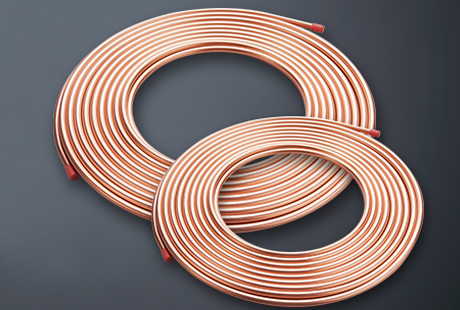
In modern HVAC systems, electrical engineering, and medical gas infrastructure, material purity and internal cleanliness are critical factors that directly affect system performance and safety. Among commonly used copper tube types, the comparison between oxygen-free copper tube and DHP (Deoxidized High Phosphorus) copper tube is one of the most important engineering decisions.
Both materials belong to high-quality copper tubing systems, but they differ significantly in oxygen content, conductivity, brazing performance, and application suitability.
Oxygen Content and Material Purity: The Core Difference
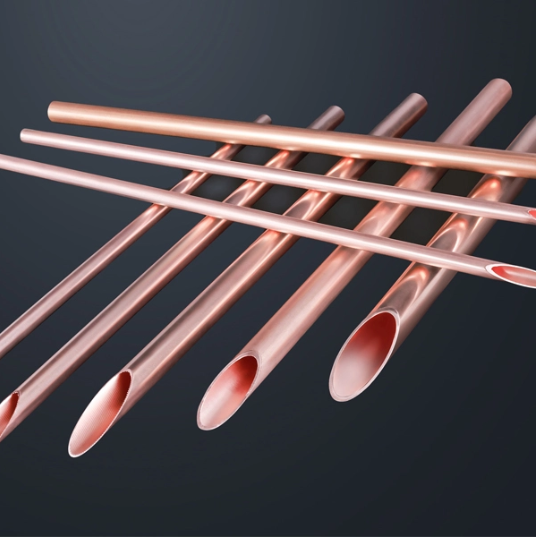
The most fundamental difference between oxygen-free copper tube and DHP copper tube lies in oxygen content and deoxidation method. Oxygen-free copper tube (OFC) is produced with extremely low oxygen levels, typically below 10 ppm. Ultra-low oxygen content reduces internal oxide inclusions, delivering enhanced electrical and thermal conductivity. It also enhances vacuum performance and reduces hydrogen embrittlement risks in high-temperature environments. DHP copper tube, on the other hand, contains controlled phosphorus for deoxidation. While it still offers good corrosion resistance and mechanical strength, its oxygen content is higher compared to OFC, making it less suitable for ultra-high purity or high-conductivity applications. Oxygen-free copper tube achieves ultra-high purity with minimal oxygen content, while DHP copper tube is phosphorus-deoxidized for stable performance and offers a more balanced cost-performance ratio. Overall, OFC provides superior internal cleanliness for sensitive applications.
Electrical Conductivity, Brazing Performance and Mechanical Behavior
From a performance perspective, oxygen-free copper tube is widely recognized for its superior electrical conductivity. Because oxygen impurities and oxide inclusions are minimized, electron flow is more efficient, making it ideal for high-performance electrical systems. Although DHP copper features marginally lower electrical conductivity, its phosphorus content delivers superior brazing performance by effectively inhibiting copper oxide formation at elevated temperatures. In practical engineering terms:
OFC copper tube is preferred for high-end electrical conductors and sensitive systems
DHP copper tube is widely used in HVAC brazing pipelines and refrigeration systems
OFC performs better in vacuum and ultra-clean environments
DHP provides better manufacturability in large-scale HVAC installation
For mechanical properties, DHP copper generally has slightly higher strength, making it easier to handle in field installation scenarios.
HVAC, Electrical and Medical Applications Comparison
Different industries prioritize different performance parameters, which leads to clear separation in application scenarios between these two materials. In HVAC systems, DHP copper tube is widely used because it offers excellent brazing reliability, cost efficiency, and sufficient corrosion resistance for refrigeration cycles and chilled water systems. It performs well in mass installation environments where welding consistency is important. In electrical applications, oxygen-free copper tube becomes the preferred choice due to its superior conductivity and signal stability. It is commonly used in high-end power systems, busbar connections, and precision electrical conductors where minimal resistance is required. In medical gas systems, oxygen-free copper tube is often selected for its high purity and low contamination risk. Medical oxygen, vacuum systems, and laboratory gas pipelines require extremely clean internal surfaces to prevent chemical reaction or contamination, making OFC the safer choice. Summary of application matching:
HVAC systems → DHP copper tube preferred for brazing and cost efficiency
Electrical systems → Oxygen-free copper tube preferred for conductivity
Medical gas systems → Oxygen-free copper tube preferred for purity and safety
Cleanliness, Reliability and Long-Term Performance
Beyond conductivity and mechanical properties, internal cleanliness plays a major role in long-term system reliability. Oxygen-free copper tube has a smoother internal structure with fewer inclusions, which reduces the risk of contamination in sensitive systems. DHP copper tube still maintains good corrosion resistance and long service life, but in ultra-high purity environments, even trace elements or oxide residues may become a concern. For long-term operation, engineers also consider resistance to internal oxidation over time, stability under thermal cycling in HVAC systems, compatibility with brazing materials and flux, and pressure stability in sealed systems. In most industrial environments, both materials perform reliably, but oxygen-free copper tube is preferred when system purity and electrical efficiency are top priorities.
Engineering Selection Perspective
When selecting between oxygen-free copper tube and DHP copper tube, engineers should not only focus on cost or strength, but also on system function and long-term operating environment. If the application involves high conductivity, vacuum systems, or medical-grade purity, oxygen-free copper tube is the optimal choice. If the system is primarily HVAC or refrigeration-based with emphasis on brazing efficiency and cost control, DHP copper tube provides a more balanced solution. In many real-world projects, both materials coexist within the same facility, each serving different functional roles in a complete system design. Jintian Copper provides industrial copper tube solutions with stable material quality and application-oriented engineering support, helping customers select the right tubing system for HVAC, electrical, and medical infrastructure.
FAQ: Oxygen-Free Copper Tube vs DHP Copper Tube
What is oxygen-free copper tube used for?
It is mainly used in electrical systems, vacuum applications, and medical gas pipelines requiring high purity and conductivity.
Why is DHP copper tube widely used in HVAC?
Because it offers excellent brazing performance, cost efficiency, and sufficient mechanical strength for refrigeration systems.
Which has better conductivity?
Oxygen-free copper tube has higher electrical conductivity due to lower oxygen content.
Is DHP copper tube suitable for medical use?
Yes. Thanks to its excellent brazing performance, DHP is the standard choice for medical piping in most applications; however, it demands a higher level of cleanliness.

 English
 한국어
한국어 français
 Deutsch
 Español
 italiano
 العربية
 tiếng việt
 Türkçe
 ไทย
ไทย 中文
中文