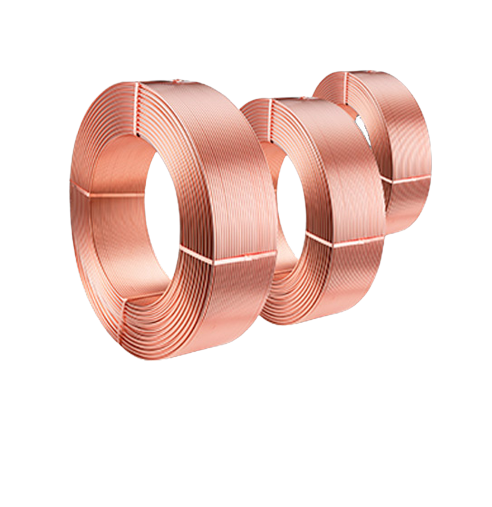
Selecting the right copper busbar supplier involves far more than just comparing material prices. Copper busbars carry and distribute electrical current, so conductivity, dimensional accuracy, flatness, surface condition, plating quality, and traceability can directly affect electrical and assembly performance.
For electrical equipment manufacturers and industrial buyers, supplier qualification should focus on measurable technical capabilities. A supplier that consistently controls material properties and dimensions can provide more predictable performance across production batches.
What Makes a Reliable Copper Busbar Supplier?
A reliable supplier should demonstrate consistent control over raw material, forming, cutting, bending, surface treatment, inspection, and packaging. The specific requirements depend on whether the busbar is used in switchgear, power distribution equipment, battery systems, transformers, or other electrical assemblies.
Material grade is only the starting point. Buyers should also evaluate conductivity, thickness tolerance, width, flatness, bend accuracy, surface quality, and required plating. Production consistency is particularly important for repeat orders because an acceptable initial sample does not always guarantee stable batch-to-batch performance.
Copper Busbar Specifications Buyers Should Verify
Before requesting quotations, buyers should establish clear copper busbar specifications covering material, dimensions, tolerances, temper, surface condition, and additional processing.
Key specifications commonly include:
· Copper grade and conductivity: Define the required alloy and electrical performance according to the applicable standard.
· Thickness and width: Specify nominal dimensions and allowable tolerances.
· Length and geometry: Include overall length, If it is an irregular shape, corresponding drawings are required.
· Flatness: Define the acceptable deviation based on actual assembly requirements.
· Surface condition: State whether bare copper, polished, plated, or another finish is required.
· Plating: For tinned products, specify coating thickness, coverage, and adhesion requirements.
A complete specification reduces the risk of suppliers quoting products that appear similar but have different technical characteristics.
How to Check Conductivity, Thickness and Flatness
Conductivity is commonly evaluated as a percentage of IACS or through a specified electrical-resistance test. Suppliers should provide test results or material documentation demonstrating compliance with the agreed requirement.
Thickness should be measured at representative points using calibrated equipment. Measuring several positions can reveal variation that a single reading may miss.
Flatness is equally important. A distorted busbar may not sit correctly against terminals, insulators, or conductive components. In compact electrical assemblies, even relatively small dimensional deviations can complicate installation.
For this reason, dimensional inspection should be based on the actual assembly requirements rather than treating flatness simply as an appearance issue.
Tinning and Surface Treatment for Copper Busbars
Copper busbars may be supplied bare or with surface treatments such as tin plating. The appropriate finish depends on electrical contact requirements, environmental exposure, joining method, and expected service conditions.
For buyers working with tinned copper busbar suppliers, plating thickness and adhesion should be clearly defined. The coating should provide consistent coverage without peeling, blistering, excessive buildup, or exposed areas where plating is required.
Surface preparation is also important because contamination or inadequate pretreatment can reduce coating adhesion. Plating quality should therefore be evaluated through both appearance and appropriate testing rather than visual inspection alone.
Traceability and Quality Documentation
Traceability connects the finished busbar with its raw material and production history. This becomes particularly valuable for electrical components used in demanding or high-reliability systems.
A qualified supplier should be able to identify the relevant heat, batch, or lot and connect it with inspection records. Depending on the application, documentation may include chemical composition, conductivity results, dimensional measurements, plating data, and mechanical test results.
Strong traceability also simplifies nonconformance investigations. If an issue occurs in one batch, the affected material can be identified without unnecessarily extending the investigation to unrelated production.
Copper Busbar Supplier Audit Checklist
A supplier audit should evaluate both documentation and actual production capabilities. Buyers can use the following criteria as a practical qualification framework:
Qualification | What to Check |
Conductivity | IACS/test report |
Thickness | Tolerance |
Flatness | Inspection method |
Plating | Thickness/adherence |
Traceability | Heat/lot number |
Testing | Mechanical/electrical |
Beyond these basic points, buyers should review equipment condition, calibration procedures, nonconformance handling, inspection frequency, and record retention.
For busbars involving complex bending, drilling, punching, or machining, production samples are particularly useful. They allow buyers to evaluate whether the supplier can maintain dimensional accuracy after processing rather than only verifying the incoming copper material.
Conclusion
Qualifying a copper busbar supplier requires a broader evaluation than checking copper grade and price. Conductivity determines basic electrical performance, while thickness, flatness, dimensional tolerances, and surface treatment influence installation and reliability. For plated busbars, coating thickness and adhesion require additional attention, while traceability connects finished products with their material and production history.
A clear specification, supplier audit, sample approval, and documented inspection plan can help electrical equipment buyers establish a more consistent and reliable busbar supply.
Copper Busbar Supplier FAQs
What conductivity should a copper busbar have?
The required conductivity depends on the copper grade and application. Buyers should specify the requirement according to the applicable material standard and verify it through supplier test documentation.
Why does busbar flatness matter?
Flatness affects how accurately a busbar fits against terminals, insulators, and other components. Excessive distortion can complicate assembly and create mechanical stress.
When should copper busbars be tin plated?
Tin plating may be considered when improved surface protection, contact performance, or oxidation resistance is required. The decision should reflect the electrical and environmental conditions of the application.
What traceability documents should suppliers provide?
Depending on project requirements, suppliers may provide material certificates, heat or lot identification, conductivity reports, dimensional inspection records, plating reports, and other quality documentation.
How should busbar dimensions be inspected?
Thickness, width, length,and flatness should be measured using calibrated equipment at representative points and compared with the specified tolerances.
What should an electrical busbar RFQ include?
An RFQ should define copper grade, dimensions, tolerances, conductivity, temper, surface condition, plating requirements, bending or machining details, inspection standards, certification, quantity, packaging, and delivery requirements.

 English
 한국어
한국어 français
 Deutsch
 Español
 italiano
 العربية
 tiếng việt
 Türkçe
 ไทย
ไทย 中文
中文