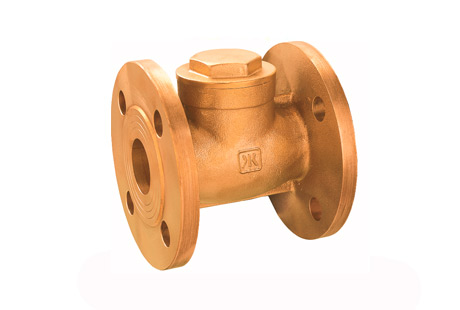
When a brass valve body must withstand pressure, repeated machining, and a demanding forging process, material selection cannot be based on machinability alone. The alloy needs to work with the complete manufacturing route, from billet preparation and hot forging to machining, cleaning and pressure testing.
CuZn38Pb2 is a leaded copper-zinc alloy that can be considered for forged components where a balance of hot-working behavior, mechanical performance and subsequent machinability is required. However, the alloy designation itself does not guarantee pressure tightness. The final performance depends on the material condition, forging quality, component geometry, defect control and inspection process.
For valve manufacturers, understanding cuzn38pb2 material therefore means looking beyond chemical composition and evaluating how the alloy behaves throughout the production process.
What Is CuZn38Pb2 Brass?
CuZn38Pb2 is a lead-containing brass based primarily on copper and zinc, with a controlled addition of lead to improve machining behavior. It belongs to the family of leaded brasses commonly used for components that require both metal forming and subsequent machining.
The designation itself provides useful information: CuZn identifies the copper-zinc base alloy, while Pb indicates the intentional presence of lead. The exact composition limits depend on the applicable material standard, so buyers should always confirm the relevant specification rather than treating the designation as a complete purchasing requirement.
In valve manufacturing, the material may begin as rod or other suitable feedstock before being heated and forged into a near-net-shape component. Machining then produces critical features such as threads, bores, sealing surfaces and connection interfaces.
This manufacturing sequence explains why cuzn38pb2 material can be attractive: the material needs to support forging while still allowing efficient machining afterward.
CuZn38Pb2 Chemical Composition and Material Properties
The performance of CuZn38Pb2 comes from the interaction between its copper-zinc matrix and controlled lead addition. Copper and zinc establish the fundamental strength, ductility and corrosion behavior of the brass, while lead can improve chip formation during subsequent cutting operations.
The most important properties for valve-body production include:
| Property | CuZn38Pb2 | Why It Matters |
|---|
| Alloy family | Leaded brass | Combines forming and machining characteristics |
| Copper-zinc base | Cu-Zn alloy | Determines basic mechanical and corrosion behavior |
| Lead | Controlled addition | Supports chip breaking and machinability |
| Machinability | Good | Useful for post-forging machining |
| Forging | Process-dependent | Requires appropriate temperature and deformation control |
| Pressure tightness | Not an inherent material guarantee | Depends on forging quality and testing |
When reviewing cuzn38pb2 chemical composition, buyers should also consider the applicable standard, product form and condition. Composition alone cannot predict the final performance of a forged valve body.
Why CuZn38Pb2 Is Used for Hot-Forged Valve Bodies
Hot forging changes the way manufacturers evaluate brass. Instead of asking only whether an alloy is easy to machine, engineers need to consider how it responds to heating, deformation and subsequent cooling.
For valve bodies, forging can produce a strong and efficient component geometry while reducing the amount of material that must be removed during machining. The process must nevertheless be controlled carefully because temperature, deformation rate, die design and lubrication can all influence the finished part.
CuZn38Pb2 can be suitable when the production route requires a workable balance between forging and machining. After forging, the component may require drilling, threading, boring, turning or precision finishing. A brass grade with useful machining characteristics can help produce clean chips and consistent machined surfaces.
The correct material choice still depends on the specific valve design. Wall thickness, pressure requirements, connection geometry and production volume should all be considered before selecting the alloy.
Machinability After Forging: What Manufacturers Should Control
Forging produces the basic valve-body shape, but machining determines many of the dimensions that directly affect assembly and sealing.
Lead in CuZn38Pb2 can contribute to improved chip breaking during machining. This can be particularly useful when valve bodies require multiple drilled holes, threaded sections or turned sealing surfaces. However, machinability after forging also depends on the forged condition, cutting parameters, tooling and dimensional consistency.
Manufacturers should pay particular attention to:
Forged dimensions: Consistent preforms reduce machining allowance variation.
Material condition: Differences in hardness or microstructure can influence cutting behavior.
Machining parameters: Cutting speed, feed rate and tool geometry should be matched to the material.
Critical surfaces: Threads, bores and sealing interfaces require tighter dimensional control than non-functional areas.
The practical advantage of a leaded brass is therefore not simply that it is “easy to machine.” The objective is stable machining performance after a controlled forging process.
Pressure Tightness and Defect Prevention in Forged Brass
For valve bodies, pressure tightness is a functional requirement rather than a simple material property.
A component manufactured from CuZn38Pb2 can only be considered pressure-tight when the complete production process produces the required structural integrity. Internal discontinuities, incomplete filling, cracks, unsuitable forging conditions or excessive machining can compromise sealing performance.
Manufacturers should therefore control the forging process from billet heating through die filling and cooling. Critical areas deserve particular attention because defects that are invisible on an external surface may become leakage paths under pressure.
Final inspection should be matched to the valve's intended application. Depending on the product specification, this may include dimensional inspection, visual examination and pressure or leak testing.
The important distinction is that pressure tightness depends on alloy condition, forging quality, geometry, porosity control and final pressure testing. It should never be assumed solely from the CuZn38Pb2 designation.
CuZn38Pb2 vs Other Leaded Brass Grades
One useful comparison is CuZn38Pb2 versus CuZn39Pb3. Both belong to leaded brass families and can offer good machining characteristics, but they should not automatically be treated as interchangeable materials.
A grade with a higher lead content may offer stronger machining advantages, while another composition may provide a different balance of forming, forging and mechanical characteristics. The appropriate choice depends on the manufacturing route rather than on lead content alone.
The keyword brass cuzn39pb3 can therefore be understood in the context of material selection: when comparing the two grades, manufacturers should examine composition limits, forging requirements, machining performance, applicable standards and final component requirements.
For a valve body, the right question is not simply “Which brass machines better?” It is “Which grade provides the most appropriate balance for the complete forging, machining and pressure-testing process?”
Conclusion
CuZn38Pb2 can be a practical material option for hot-forged valve bodies where manufacturers need a balance between brass forging performance and subsequent machinability. Its lead addition can support efficient machining, while the copper-zinc base provides the underlying properties expected from an engineering brass.
However, cuzn38pb2 material should always be selected together with the manufacturing process and application requirements. Forging temperature, die design, material condition, machining allowance and pressure-testing procedures can have as much influence on the finished valve as the nominal alloy designation.
For buyers evaluating cuzn38pb2 chemical composition, the best approach is to specify the required standard, product form, dimensions, condition and end-use requirements rather than relying on the alloy name alone.
FAQ
1. Why is CuZn38Pb2 used for valve bodies?
It can provide a useful balance of forging characteristics and post-forging machinability, making it suitable for certain brass valve-body manufacturing routes.
2. Does lead improve post-forging machinability?
Yes. Controlled lead additions can improve chip breaking and cutting behavior, although actual machining performance also depends on material condition and processing parameters.
3. How can forging defects affect pressure tightness?
Cracks, incomplete filling, internal discontinuities or other defects can create potential leakage paths. Controlled forging and appropriate pressure testing are therefore essential.
4. Is CuZn38Pb2 suitable for CNC machining?
Yes, it can be machined effectively, particularly when cutting conditions and tooling are properly matched to the forged material condition.
5. How does CuZn38Pb2 compare with CuZn39Pb3?
Both are leaded brasses, but their composition and processing characteristics can differ. The better choice depends on the required balance of forging, machining and final component performance.
6. What tests should forged valve bodies undergo?
Testing depends on the application and applicable specification, but dimensional inspection, visual examination and pressure or leak testing are commonly important for valve-body quality control.

 English
 한국어
한국어 français
 Deutsch
 Español
 italiano
 العربية
 tiếng việt
 Türkçe
 ไทย
ไทย 中文
中文