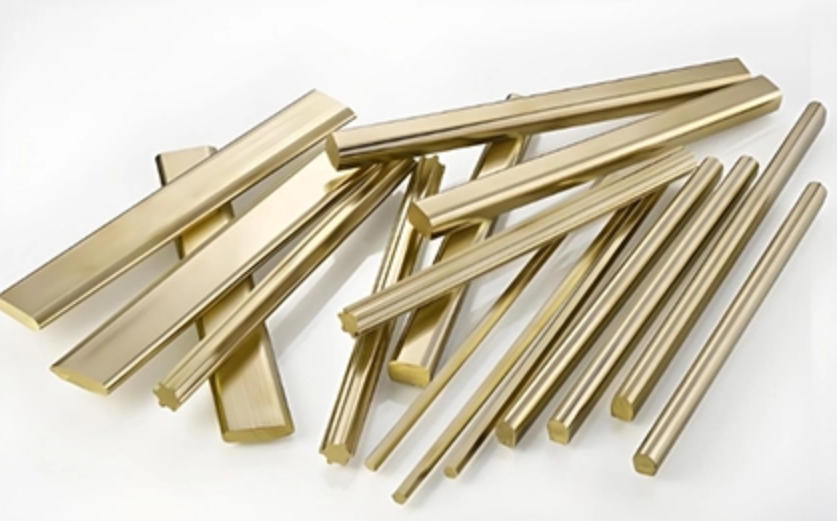
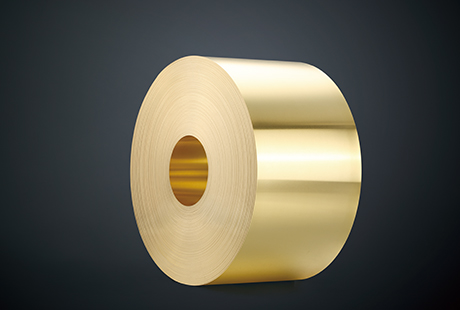
Choosing a brass rod for forged components requires more than looking for a material with excellent machinability. The alloy also needs to respond predictably to heating, deformation, machining, and subsequent finishing. CuZn36Pb3 is a leaded copper-zinc alloy that can provide a useful combination of machinability, strength, and corrosion resistance for industrial components, but its suitability for forging should be evaluated together with the specific process and component geometry.
For manufacturers purchasing brass rod, the key question is not simply whether the alloy can be machined. It is whether the selected grade, product condition, dimensions, and processing route can deliver the required forged component efficiently and consistently.
What Is CuZn36Pb3 Brass?
CuZn36Pb3 is a copper-zinc-lead brass alloy in which lead is intentionally added to improve machining characteristics. The material is supplied in product forms such as rod and bar and can be considered for components that require subsequent turning, drilling, threading, or other machining operations.
The lead addition can promote chip breaking and improve cutting behavior, which is particularly valuable when manufacturers produce large quantities of relatively complex components. However, lead should not be viewed as an improvement to every material property. The final performance of CuZn36Pb3 depends on its chemical composition, product form, temper, dimensions, and applicable standard.
JINTIAN's material range includes CuZn36Pb3 Copper, providing a direct reference point for manufacturers evaluating this grade for industrial rod applications.
CuZn36Pb3 Chemical Composition and Key Properties
The chemical composition of brass determines its microstructure and therefore influences machinability, strength, ductility, corrosion resistance, and hot-working behavior. For procurement purposes, the exact limits should always be confirmed against the applicable standard rather than relying solely on nominal alloy names.
| Property | CuZn36Pb3 |
|---|
| Alloy family | Leaded brass |
| Copper | Approximately 62–64% |
| Zinc | Balance |
| Lead | Approximately 2.5–3.5% |
| Machinability | Excellent |
| Strength | Good, depending on condition |
| Corrosion resistance | Good in suitable environments |
| Typical form | Rod / bar |
The CuZn36Pb3 chemical composition should be verified against the required specification because permissible ranges can vary between standards. Mechanical properties can also change with product form and processing condition.
For buyers, this means chemical composition is only one part of the specification. Temper, diameter, tolerance, and intended manufacturing process should be defined at the same time.
How CuZn36Pb3 Balances Machinability and Strength
One of the main advantages of CuZn36Pb3 is its machining behavior. Lead can help interrupt and break chips during cutting, reducing the tendency for long chips to interfere with automated production.
This can be particularly useful for CNC turning and other operations where production efficiency and consistent surface quality are important. Depending on the machining setup, the alloy can support efficient cutting while maintaining the mechanical characteristics required for industrial components.
However, machinability should not be evaluated independently from component requirements. Cutting speed, tool geometry, feed rate, lubrication, workpiece diameter, and desired surface finish all affect machining performance.
The material condition also matters. A harder condition may provide different dimensional stability and cutting behavior from a softer condition. Therefore, when specifying CuZn36, manufacturers should consider the complete processing route rather than assuming that the alloy designation alone determines machining performance.
Can CuZn36Pb3 Be Used for Hot Working and Forging?
Forging introduces a different set of material requirements from CNC machining. A brass grade that performs exceptionally well during cutting is not automatically the best choice for every forging operation.
For hot working, manufacturers need to consider heating temperature, deformation rate, forging equipment, component geometry, and the degree of deformation required. Excessive deformation or unsuitable processing conditions can increase the risk of surface defects or cracking.
For a forged component that will subsequently undergo machining, the overall process should therefore be considered as a sequence:
Rod preparation → heating → forging → cooling → machining → finishing
The optimum process window depends on the alloy specification and component design. Process validation is especially important when producing parts with complex geometries, thin sections, sharp transitions, or demanding dimensional tolerances.
This distinction between machinability and forgeability is critical. The best alloy for CNC machining is not automatically the best alloy for every forging process. Buyers should discuss both the forging route and subsequent machining requirements when selecting the material.
CuZn36Pb3 Brass Rod Applications
CuZn36Pb3 brass rod can be considered for industrial components where machining efficiency is a major requirement. Typical applications may include forged and machined fittings, valves, precision hardware, connectors, fasteners, and other mechanical components.
The material is particularly relevant when the manufacturing process involves significant secondary machining after forming. For example, a forged blank may require drilling, threading, turning, or precision finishing before assembly.
A suitable leaded brass rod specification should therefore account for both the initial forming operation and the final machining process. Rod diameter is also important because it affects material utilization, heating behavior, machining time, and the amount of material removed during production.
JINTIAN's Leaded Brass Rod product range provides an option for manufacturers evaluating brass rod according to machining, forming, and dimensional requirements.
How to Specify CuZn36Pb3 Brass Rod
A clear RFQ helps ensure that the supplied rod matches both the forging process and the final component requirements. Buyers should define:
Alloy designation: Confirm CuZn36Pb3 and the applicable material standard.
Diameter: Specify the required nominal size and tolerance.
Length: Define fixed or standard lengths where necessary.
Temper: State the required material condition.
Surface condition: Identify relevant surface-quality requirements.
Straightness: Include requirements where automated feeding or precision machining is involved.
Dimensional tolerance: Define standard or application-specific limits.
Forging requirements: Provide information about the forming process and component geometry.
Machining requirements: State critical dimensions, surface finish, or machining method.
Documentation: Specify required inspection and material certificates.
For forged components, selecting the alloy together with rod dimensions and processing conditions can help manufacturers reduce unnecessary machining and improve production consistency. JINTIAN can help buyers match leaded brass rod grades with forging, machining, and dimensional requirements.
FAQ
Is CuZn36Pb3 suitable for precision machining?
Yes. Its lead addition promotes chip breaking and generally provides excellent machinability, although actual results depend on tooling, cutting parameters, material condition, and component geometry.
What does Pb do in CuZn36Pb3?
Lead primarily improves machining behavior by helping with chip breaking and cutting efficiency. It should not be interpreted as improving every mechanical or forming property.
Can CuZn36Pb3 be used for forged fittings?
It may be considered for forged and subsequently machined fittings, but the specific forging process, temperature, deformation, and component geometry should be validated before production.
Does rod diameter affect machining performance?
Yes. Diameter can influence cutting conditions, material removal, heat generation, tooling requirements, and production efficiency.
Is CuZn36Pb3 suitable for cold forming?
Cold-forming suitability depends on the required deformation and material condition. It should be evaluated against the specific forming operation rather than assumed from its machinability rating.
What information should be included in a brass rod RFQ?
Specify the alloy, applicable standard, diameter, length, temper, tolerance, surface condition, forging requirements, machining requirements, and required inspection documentation.

 English
 한국어
한국어 français
 Deutsch
 Español
 italiano
 العربية
 tiếng việt
 Türkçe
 ไทย
ไทย 中文
中文