Current-Carrying Capacity of Copper Busbars: A Key Parameter in the Design of Power Distribution and Switchgear
In power distribution systems, industrial switchgear, and electrical control cabinets, copper busbar current carrying capacity is one of the most critical design parameters. An incorrectly sized busbar can lead to excessive temperature rise, energy loss, insulation aging, or even system failure.
Because copper busbars are used to carry high current in compact spaces, engineers must carefully evaluate cross-sectional area, installation environment, surface treatment, and safety margin before final selection.
What Determines Copper Busbar Current Carrying Capacity?
The current carrying capacity of a copper busbar is not a fixed value—it depends on multiple engineering factors. In simple terms, it is determined by how much heat the busbar generates under load and how efficiently that heat is dissipated into the environment. The main influencing factors include cross-sectional area of the busbar, ambient temperature and ventilation conditions, installation method (open air, enclosed cabinet, stacked busbars), surface condition (bare copper or tin-plated), and allowable temperature rise of the system design. In practice, engineers do not rely on a single theoretical number but instead design based on thermal balance.
Cross-Sectional Area and Basic Current Estimation
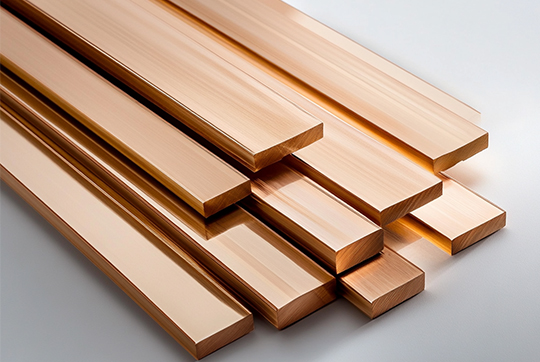
The most direct factor affecting current capacity is the cross-sectional area of the copper busbar. A larger area reduces electrical resistance, which directly lowers I²R losses and heat generation. A commonly used engineering approximation is:
· Higher cross-sectional area → higher current capacity
· Lower cross-sectional area → higher temperature rise risk
However, this relationship is not linear in real applications. In practical engineering applications, when the cross-sectional area is doubled, the current-carrying capacity typically increases by only about 70% to 80% (depending on heat dissipation conditions). This is because as the conductor size increases, its surface-area-to-volume ratio decreases, resulting in reduced heat dissipation efficiency.
Current Carrying Capacity and Temperature Rise Control of Copper Busbars: Product Advantages and Technical Assurance Key Limiting Factor in Design
In real electrical systems, busbar design is usually limited by allowable temp The current-carrying capacity of copper busbars is nonlinearly proportional to temperature rise, which is determined by the I²R thermal effect. The upper limit of ampacity is constrained by the allowable temperature rise. This balance is influenced by cross-sectional area, heat dissipation, and surface treatment. Our copper busbars strictly comply with GB/IEC standards. Through optimized design and coating processes, we achieve a 10%~15% improvement in current-carrying capacity. Widely used in new energy vehicles, energy storage systems, and data centers, our products maintain temperature rise below 55K, delivering safe and reliable performance for our customers.
Tin Plating and Surface Treatment Effects
Surface treatment plays an important role in improving long-term reliability of copper busbars. Tin plating is widely used because it enhances corrosion resistance and improves electrical contact stability. Compared with bare copper, tin-plated busbars provide better resistance to oxidation in humid environments, lower contact resistance at joints and connectors, improved long-term stability in switchgear systems, and easier soldering and assembly performance. Although tin plating does not significantly increase current carrying capacity itself, it helps maintain stable performance over long service life, especially in industrial environments with high humidity or chemical exposure. Jintian Copper has ample supplier resources to provide tin-plated, nickel-plated, and silver-plated copper busbar products.
Engineering and Procurement Considerations
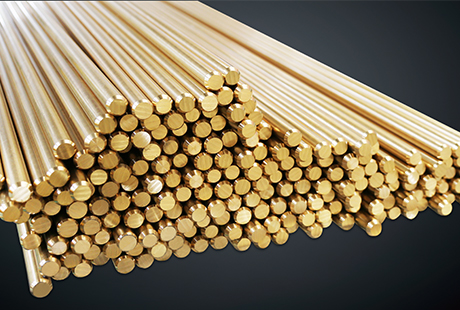
When selecting copper busbars, engineers and procurement teams must evaluate more than just current rating charts. Material purity, dimensional accuracy, surface finish, and consistency in manufacturing all affect long-term performance. Copper busbar specifications play a decisive role in ensuring the selected product meets both electrical and mechanical requirements in demanding applications. Jintian Copper focuses on providing industrial-grade electrical copper bar solutions with stable conductivity, reliable mechanical strength, and consistent production quality, supporting applications in power distribution, switchgear, and electrical control systems.
FAQ: Copper Busbar Current Carrying Capacity
What is copper busbar current carrying capacity?
It is the maximum electrical current a busbar can carry without exceeding the allowable temperature rise.
What is the main factor affecting capacity?
Cross-sectional area and heat dissipation conditions are the most important factors.
Does tin plating increase current capacity?
Not directly, but it improves corrosion resistance and long-term electrical stability.
Why does temperature rise matter?
Because excessive heat can damage insulation, increase resistance, and reduce system lifespan.

 English
 한국어
한국어 français
 Deutsch
 Español
 italiano
 العربية
 tiếng việt
 Türkçe
 ไทย
ไทย 中文
中文