Choosing between brass grades often comes down to balancing strength and formability. C28000 and C26000 are both copper-zinc brasses, but their different copper-zinc ratios give them distinct property profiles. C28000 is commonly associated with 60/40 brass, while C26000 (70/30 brass) contains a higher proportion of copper and is recognized for its excellent ductility and forming performance.
For manufacturers, the decision should not be based on copper content alone. Product thickness, temper, forming method, dimensional requirements, and final application all influence which grade is the better starting point.
What Is C28000 Brass?
C28000 is a copper-zinc brass commonly known as 60/40 brass (UNS C28000 / ASTM B36), with a nominal composition of approximately 60% copper and 40% zinc (zinc as balance). It belongs to the brass family used for mechanical components, hardware, fittings, and marine/architectural applications where a useful combination of strength, hardness, and corrosion resistance is required.
The higher zinc proportion gives C28000 a different mechanical balance from higher-copper brasses. It provides good strength and hardness while still offering useful workability for many conventional manufacturing processes.
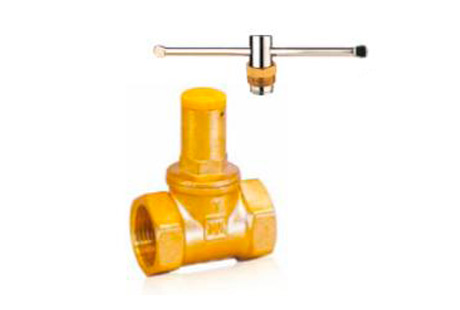
Typical applications include hardware, mechanical fittings, structural components, and general-purpose brass products. However, exact properties depend on the applicable standard and temper—a soft annealed product and a harder cold-worked product from the same alloy behave very differently during bending or forming.
C28000 vs C26000: Chemical Composition
The most obvious distinction is their copper-zinc balance.
When reviewing C28000 chemical composition, use the relevant ASTM or other governing specification rather than relying on generic alloy tables. Actual composition limits may include controlled amounts of other elements (Pb, Fe, Sn), and mechanical properties depend strongly on temper and product form.
C26000, commonly known as 70/30 brass or cartridge brass, is widely used where higher ductility and forming capability are important.
How Zinc Content Affects Strength and Formability
The copper-zinc ratio is a fundamental factor influencing brass properties. Increasing zinc content generally increases strength and hardness, while higher copper content supports greater ductility and formability.
This creates a useful design trade-off:
However, this should not be treated as a simple linear rule. Temper, grain structure, cold work, thickness, and processing conditions can significantly change the actual behavior of a finished product.
For manufacturers, the practical question is whether the component needs more mechanical strength or greater ability to undergo deformation without cracking.
C28000 is attractive when strength and general mechanical performance are important. C26000 is a better starting point when substantial forming and ductility are required.
Typical mechanical properties (H02 temper, per ASTM B36):
Note: The following values are typical ranges based on common industry data and may vary with thickness, product form, and standard edition. Always confirm with the current ASTM B36 specification.
C28000 vs C26000 for Stamping and Forming
Both grades can be processed through stamping, bending, blanking, and other forming operations, but the severity of deformation matters.
For C28000, relatively straightforward forming is appropriate when the required geometry does not impose excessive deformation. Its higher zinc content provides useful strength, but severe forming may require careful control of temper, tooling, and intermediate annealing.
C26000 is widely used where greater ductility is needed. Its higher copper content contributes to excellent forming characteristics, making it suitable for components that undergo substantial deformation—including deep drawing, complex stamping, and tight-radius bending.
When evaluating a forming process, manufacturers should consider:
Forming severity — simple bending vs complex multi-stage forming
Temper — softer conditions provide greater ductility
Thickness — affects deformation behavior and forming force
Work hardening — cold deformation increases strength while reducing ductility
Tooling — punch radius, die clearance, and lubrication influence cracking and surface quality
Industrial Applications
The different property profiles make these grades useful across different component categories.
C28000 applications:
General hardware and fittings
Mechanical components
Marine and architectural applications
Structural brass parts
Components where strength and hardness are important
C26000 applications:
Formed sheet and strip components
Electrical terminals and connectors
Radiator and heat-transfer components
Decorative parts
Components requiring substantial forming
The final selection should be based on alloy standard, temper, dimensions, surface condition, and manufacturing process—not application category alone.
Which Brass Grade Should Manufacturers Choose?
A practical comparison:

 English
 한국어
한국어 français
 Deutsch
 Español
 italiano
 العربية
 tiếng việt
 Türkçe
 ไทย
ไทย 中文
中文