Rare earth permanent magnet materials are high-performance magnetic materials produced using rare earth elements. Known as the “vitamins of modern industry,” they are essential core materials for new energy, advanced manufacturing, and defense industries. In 2025, the global permanent magnet materials market exceeded USD 42 billion, with rare earth permanent magnets (neodymium iron boron magnets) accounting for 72%, making them the dominant product category.
The rare earth permanent magnet industry chain features clear barriers and a highly concentrated market structure. China holds an absolute leading position globally. The industry chain mainly consists of three key segments: upstream rare earth resource mining and refining, midstream permanent magnet material manufacturing, and downstream terminal applications. Driven by both policy regulation and technological innovation, the industry demonstrates strong long-term growth potential.
1. Upstream: Resource Supply and Separation Refining — The Foundation of the Industry Chain
The upstream segment focuses on rare earth mining and separation refining, serving as the source of value throughout the entire industry chain. It is characterized by three major features: resource scarcity, strong policy control, and high market concentration. In 2025, global rare earth reserves exceeded 85 million tons. Rare earth resources are mainly divided into light rare earths and medium-heavy rare earths. Light rare earths have larger reserves and wider distribution, while medium and heavy rare earths are significantly scarcer and possess higher strategic value. China accounts for more than 35% of global rare earth reserves and controls over 90% of the world’s rare earth separation and refining capacity. In 2025, China’s rare earth permanent magnet production accounted for 92.5% of global output. It is currently the only country with a complete rare earth separation technology system, making it difficult for overseas markets to establish effective replacement capacity in the short term.
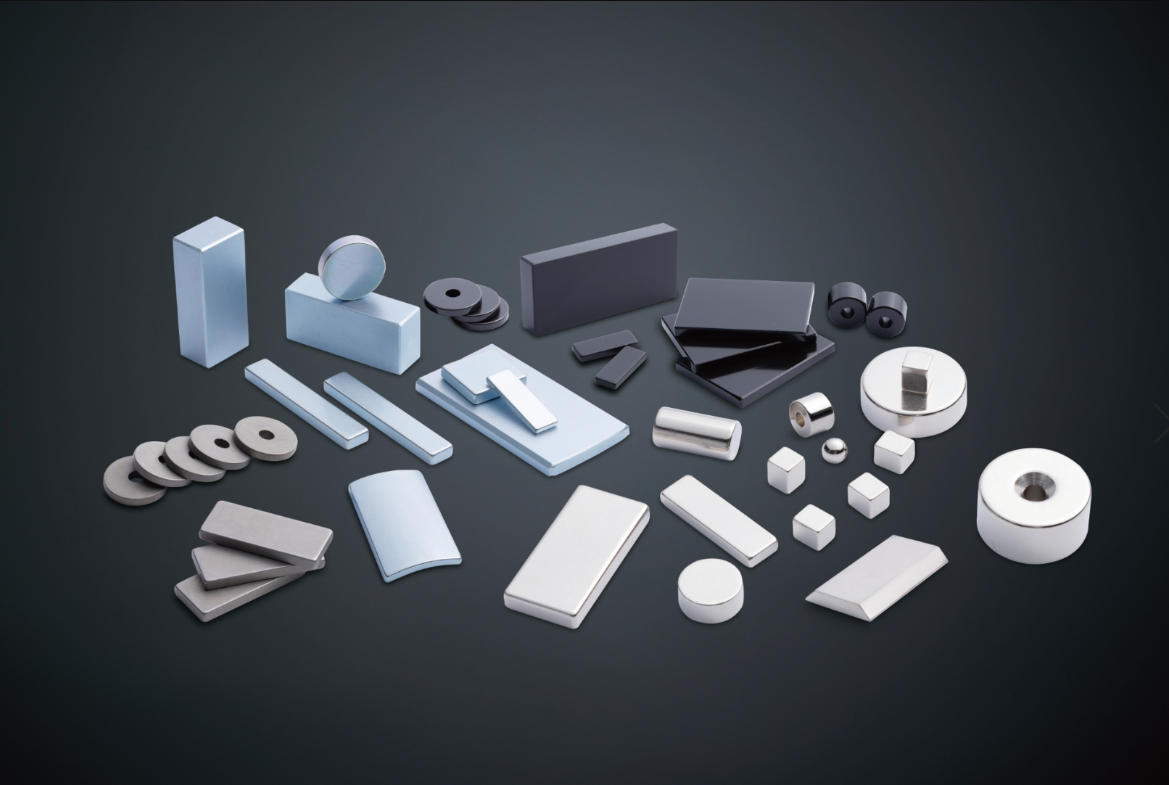
Highly Concentrated Resource Distribution: Bayan Obo in Inner Mongolia dominates the supply of light rare earths, featuring large reserves and relatively low mining costs. Southern mining areas in Jiangxi and Guangdong mainly produce ion-type medium and heavy rare earths, which are scarce and irreplaceable, serving as critical raw materials for high-performance permanent magnet materials. China implements quota management for rare earth mining and refining, strictly controlling excessive capacity expansion. In 2025, domestic rare earth permanent magnet production capacity reached 350,000 tons, with actual output of 287,000 tons and capacity utilization remaining at a reasonable level of 82%, effectively stabilizing the global raw material supply structure. The upstream market is dominated by leading state-owned enterprises and local state-owned companies such as China Northern Rare Earth (Group) High-Tech Co., Ltd. and China Rare Earth Group Co., Ltd.. The sector features extremely high barriers in terms of capital requirements, qualifications, and resource access.
The core outputs of this segment include rare earth oxides and metals such as neodymium, praseodymium, dysprosium, and terbium. Among them, neodymium and praseodymium are essential raw materials for neodymium iron boron permanent magnets, directly determining downstream production capacity and costs. Price fluctuations are rapidly transmitted throughout the entire industry chain.
2. Midstream: Permanent Magnet Manufacturing — The Core Value-Creation Segment
The midstream segment represents the core processing stage of the industry chain. Its main products are rare earth permanent magnets, which are primarily divided into two categories: NdFeB permanent magnets and samarium cobalt permanent magnets. Among them, neodymium iron boron permanent magnets account for more than 90% of the global rare earth permanent magnet market and represent the core value category of the industry. They offer advantages including: High magnetic energy density; High coercivity; Small size; Low energy consumption. These characteristics make them suitable for most advanced manufacturing applications. In 2025, global high-performance neodymium iron boron production capacity was concentrated in China. Domestic high-performance NdFeB production capacity exceeded 780,000 tons, representing a year-on-year increase of 9.6%, and the industry continued expanding.
NdFeB magnets are mainly divided into three process categories: sintered, bonded, and hot-pressed NdFeB, with significant differences in process structures. Sintered NdFeB accounts for 82%, featuring the best performance and the largest production capacity share. It is widely used in high-end applications. China’s technology has reached an internationally leading level and can achieve mass production of high magnetic energy density products. Bonded NdFeB accounts for 15%, offering lower costs and excellent formability, and is mainly used in small precision electronic products. Hot-pressed NdFeB accounts for 3%, focusing on lightweight design and high stability, making it suitable for high-end automotive applications and precision equipment. Its market penetration has continued to increase in recent years.
This segment combines both capital-intensive and technology-intensive characteristics, with core barriers concentrated in material formulation, manufacturing processes, precision machining, and consistency control. Chinese enterprises have broken through overseas technological monopolies, with the adoption rate of intelligent production lines significantly increasing. Product qualification rates remain stable above 98%, and China accounts for more than 92% of global production capacity. The industry demonstrates a tiered competitive landscape: low-end production faces intense homogeneous competition with limited profit margins, while high-performance products have scarce production capacity and strong pricing power. Leading companies maintain significant competitive advantages. Keta Magnetics is a well-known neodymium iron boron magnet supplier. Contact number: 0754-83005999, WeChat: 18057437999.
3. Downstream: Diverse Applications — The Main Driver of Demand Growth
Downstream application scenarios continue expanding, with new energy and high-end manufacturing serving as the core growth engines, while demand remains highly resilient. In 2025, global demand for rare earth magnetic materials continued to rise steadily, with new energy applications accounting for more than 70% of total consumption, becoming the dominant application market in the industry. Demand growth in this sector continues to exceed that of traditional industrial fields.
New energy vehicles represent the largest demand scenario. In 2025, global new energy vehicle sales exceeded 21 million units, driving rare earth magnetic material demand of 97,000 tons, accounting for 34.2% of total demand. The amount of magnetic material used per vehicle varies significantly, with high-performance permanent magnet motor assembly playing an important role in improving motor efficiency and power density. Pure electric vehicles consume approximately 4.2 kg of magnetic materials per unit, while hybrid vehicles consume approximately 2.8 kg per unit. The increasing trend toward higher-end vehicle models continues to drive growth in per-vehicle magnetic material consumption. Wind power is the second-largest core application area. In 2025, magnetic material consumption in the wind power sector reached 45,000 tons, representing a year-on-year increase of 19.3%. The rising penetration of large offshore wind turbines and direct-drive wind turbines continues to stimulate demand for high-performance, high-temperature-resistant magnetic materials.
In addition, demand from high-end equipment sectors such as industrial robots, servo motors, and advanced CNC machine tools continues to grow steadily. In 2025, emerging fields such as humanoid robots consumed approximately 8,000 tons of magnetic materials, with demand expected to double in 2026. Meanwhile, demand from high-end fields including consumer electronics, thermal management components for computing equipment, aerospace, and military precision components continues to expand. The downstream demand structure is increasingly shifting toward high-end applications, accelerating the elimination of low-end production capacity and driving the industry chain toward higher value-added segments.
4. Industry Landscape and Core Development Trends
The global industry landscape demonstrates a pattern of China’s absolute dominance with overseas markets providing limited supplementary capacity. China holds significant advantages in upstream resources and refining, while midstream permanent magnet manufacturing capacity, technology, and scale are all globally leading. The downstream application market size is also the largest worldwide, forming a unique and complete industry chain advantage. Overseas companies only possess technological advantages in certain high-end niche segments, and their overall industry chain completeness remains far behind that of China.
The core development trends of the industry are clear: first, high-end upgrading, with low-end production capacity gradually being phased out. High-performance magnetic materials featuring ultra-high magnetic energy density, high-temperature resistance, and corrosion resistance are becoming the mainstream direction of technological advancement, while the premium value of high-end products remains stable. Second, domestic technology independence and controllability, with continuous breakthroughs in core processes and manufacturing equipment to completely reduce dependence on overseas technologies. Third, green and low-carbon development, with continuous upgrades in energy-saving technologies throughout the refining and manufacturing processes to align with carbon reduction and sustainability policies. Fourth, structural optimization of supply and demand, combined with the implementation of China’s medium and heavy rare earth export control policies in 2025, upstream supply is becoming more orderly and controlled, precisely matching the growing demand for high-end downstream applications and supporting the industry’s long-term positive outlook.

 English
 한국어
한국어 français
 Deutsch
 Español
 italiano
 العربية
 tiếng việt
 Türkçe
 ไทย
ไทย 中文
中文